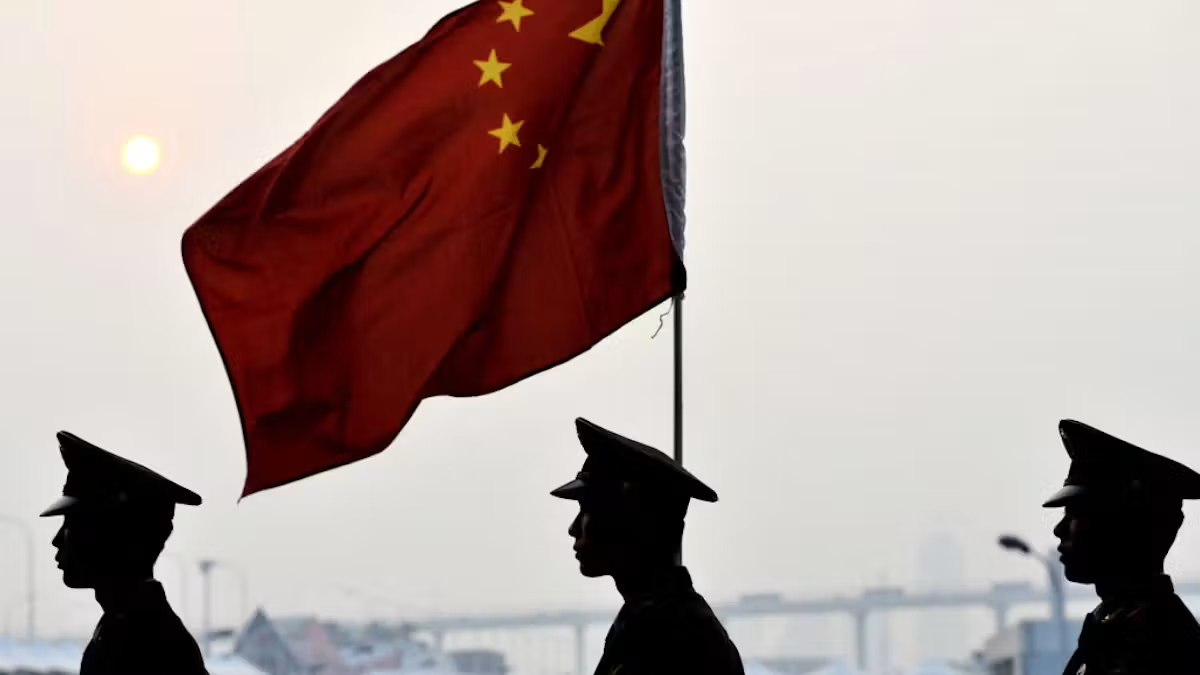
Chinese Satellite Imagery Linked To Iranian Strike That Killed Three US Troops
Chinese companies allegedly supplied Iran with high-resolution satellite imagery of a U.S. military base shortly before an Iranian missile attack killed three American troops, according to U.S. officials familiar with the intelligence, raising fresh tensions between Washington and Beijing as President Donald Trump prepares to meet with Chinese President Xi Jinping.
Read more Fans Pelt Pro-Palestinian Field-Rusher With Beer Cans During 9/11 Anniversary Game
The officials told the Wall Street Journal that Iran obtained the imagery from Chinese entities before and after the July 17 attack on Muwaffaq Salti Air Base in Jordan. U.S. officials have linked the imagery to the deadly strike, though they have not identified the Chinese companies involved or accused the Chinese government of directly ordering or authorizing the assistance.
The attack killed Army 1st Lt. Tyler James Feehan, Pvt. Isabella Gonzales, and Sgt. Angel S. Rampersad. Feehan died from injuries sustained during the July 17 attack, while Gonzales and Rampersad were killed in the attack itself, according to the U.S. Army. Four other American service members were wounded.
The strike was one of three Iranian missile attacks against the base within a 24-hour period. Iranian missiles struck a housing area where American troops were sleeping, while other missiles targeted aircraft and other U.S. assets at the installation, according to U.S. officials cited by the Journal.
American officials had spent months warning Beijing that Chinese companies were providing Iran with satellite imagery that could be used to target U.S. forces. The Trump administration sanctioned MizarVision, Earth Eye, and Chang Guang — all Chinese companies — in May. The sanctions were leveled due to allegations that they were providing, collecting, or publishing satellite imagery that could be used by Iran against American personnel and military assets.
The State Department had previously accused Chang Guang of providing satellite imagery that directly supported attacks by Iran-backed Houthi militants, according to the Journal. Now, U.S. officials say they have connected Chinese-sourced imagery to an attack that actually killed American service members.
Senior U.S. officials reportedly raised the July attack and the imagery with their Chinese counterparts. Beijing pushed back and demanded evidence, while Chinese officials have repeatedly denied that Chinese companies are providing Iran with imagery for military targeting.
A Chinese Embassy spokesman did not directly address the specific allegations. Instead, spokesman Liu Chang accused unnamed critics of “maliciously linking and smearing other countries” and said Chinese cooperation with Iran complies with international law, according to the Journal.
Read more Woman Stuns Oprah Crowd Sympathetic To Lindsay Clancy With Haunting Detail
The White House has also downplayed the broader significance of foreign assistance to Iran, with an administration official saying that no outside assistance had enhanced Tehran’s ability to attack American targets. Secretary of State Marco Rubio was similarly cautious after meeting Chinese Foreign Minister Wang Yi days after the July attack. When asked whether China was providing Iran with targeting information, Rubio said that “nothing that China has done has in any way changed the trajectory of the conflict.”
But U.S. officials say Iran’s ability to target American forces appeared to improve over the course of the conflict. Earlier in the conflict, American attacks damaged Iranian radar, satellites, and other systems, degrading Tehran’s ability to monitor the battlefield. Iranian missiles consequently struck locations of lesser military significance or missed important American assets.
High-resolution satellite imagery can give Iran a much more current picture of a military installation, potentially revealing changes in the location of personnel, aircraft, vehicles, and other assets. Former CIA analyst Jim Lamson told the Journal that fresh imagery could help Iran “select the most impactful targets in a timely manner” and evaluate whether previous strikes had been successful.
The satellite imagery, however, would have been only one part of Iran’s intelligence picture. Tehran also operates its own satellites and uses human intelligence, while U.S. officials have said Russia provides Iran with intelligence and imagery as well.
U.S. officials are also concerned that Chinese assistance could help Iran track American naval forces in the region. Iranian ballistic missiles have recently been fired at U.S. warships, including an aircraft carrier and other vessels. The attacks failed to hit the ships, but U.S. officials have described some of the incidents as close calls and said Iran’s ability to target moving American vessels appears to be improving.
The disclosure comes less than two weeks before Trump’s planned September 24 meeting with Xi. Trump has made maintaining relations with Xi a priority, while senior administration officials have sought to avoid public confrontations with Beijing that could complicate the summit. The newly reported intelligence puts a potentially lethal dimension on one of Washington’s longstanding complaints about China’s relationship with Tehran.











Post Comment