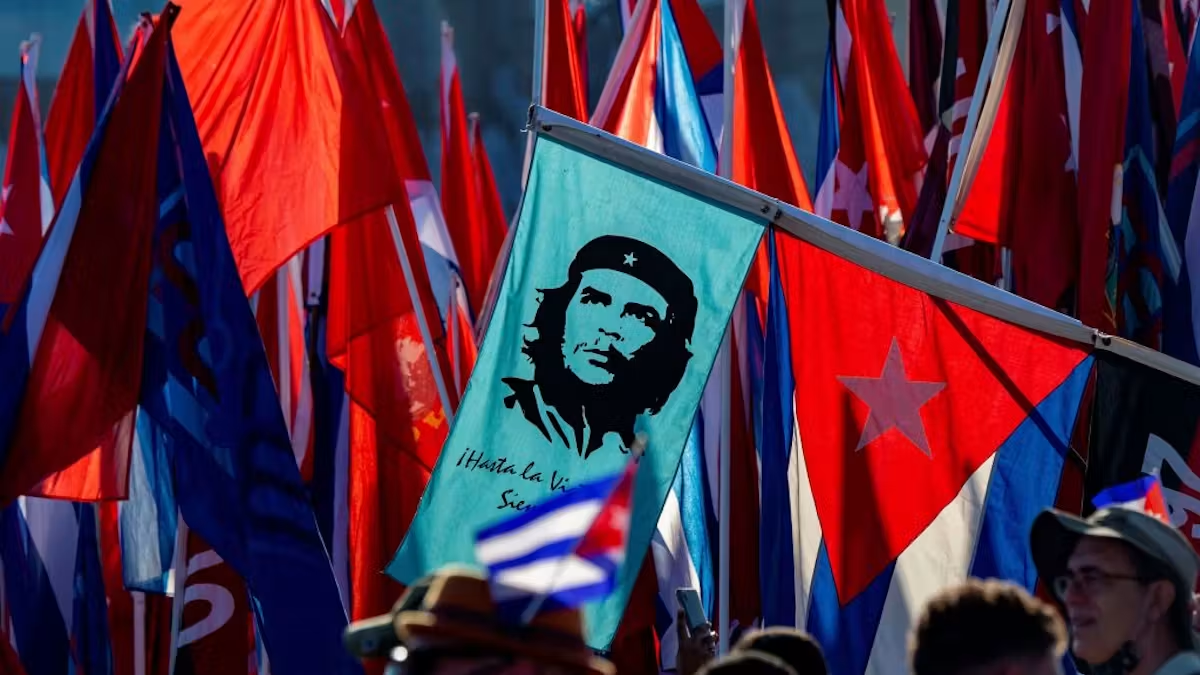
Infamous Castro Ally Dies As U.S. Ramps Up Pressure On Cuba
Ramiro Valdés Menéndez, one of the last surviving commanders of the Cuban Revolution and a longtime ally of Fidel Castro, died Sunday at 94 years old, Cuban authorities announced.
Read more Supreme Court Strikes Down ‘Vampire Rule’ In Major Win For Gun Rights
Valdés was one of the few remaining figures who connected Cuba’s current communist leadership to the original revolutionary movement that brought Castro to power in 1959. He joined Castro’s 1953 attack on the Moncada barracks, the failed assault that marked the beginning of the Cuban Revolution, and later fought under Ernesto “Che” Guevara. He became one of the few rebels to receive the title “Commander of the Revolution” and was also named a “Hero of the Republic of Cuba,” according to the Associated Press.
The Cuban Communist Party did not disclose a cause of death. President Miguel Díaz-Canel mourned Valdés publicly, saying his death felt like losing a father and praising his loyalty to Fidel and Raúl Castro.
Valdés held some of the most powerful positions in the Cuban state. He served as interior minister, telecommunications minister, vice president, and eventually became the Communist Party’s third-ranking official. Though he rarely appeared in public and did not speak to the press, he remained a symbol of the revolutionary generation that shaped Cuba’s political system for decades.
His career also reflected the internal politics of the Castro era. According to the Associated Press, Valdés fell out with Fidel Castro while serving as interior minister in 1986 and spent years outside the center of power before returning to the Council of State in 2003. In 2006, Raúl Castro chose him to lead the telecommunications ministry after taking over presidential powers from his ailing brother. Valdés was promoted to vice president three years later.
Valdés’ death comes as the Trump administration has escalated pressure on Havana. The United States announced new sanctions this week against Cuban state-run companies, including entities tied to GAESA, the military-run conglomerate that plays a major role in Cuba’s economy. Secretary of State Marco Rubio accused Cuba’s ruling elites of using the country’s resources for repression and espionage instead of serving the Cuban people.
Read more SEE IT: ‘Baywatch’ Is The Latest Victim Of California’s Homeless Crisis
The administration has described the sanctions as part of a broader effort to target the communist regime’s military-connected economic network.
The greater pressure campaign has also included sanctions on Cuban officials the White House says are responsible for repression and threats to U.S. national security.
The timing places Valdés’ death against a familiar struggle over Cuba’s future. For Havana, he was remembered as a loyal revolutionary who remained faithful to Fidel and Raúl Castro. For critics of the regime, he represented the generation that built and defended a one-party communist state that has ruled the island for more than six decades.
Valdés was born April 28, 1932, in Artemisa, west of Havana. His career spanned more than seven decades, from the early days of the Cuban Revolution to senior leadership roles in the communist government, making him one of the last prominent figures directly tied to Fidel Castro’s rise to power.
Read more Judge In Hot Seat After COVID Insanity Claim Clears Mom Who Drowned Her Baby










Post Comment