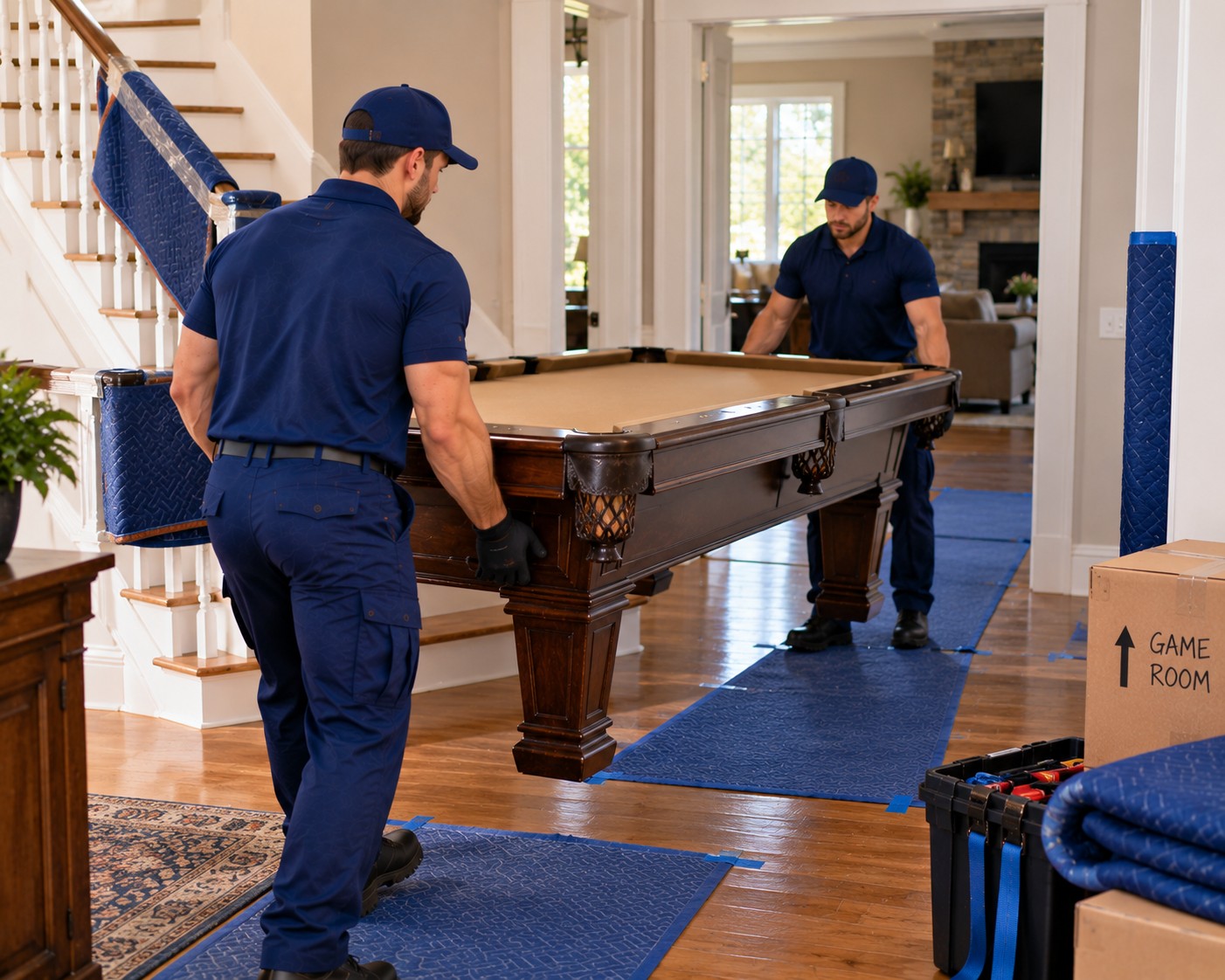
Beyond the Driveway: How to Plan a Safe Route for Moving a Pool Table
Moving a pool table is not simply a matter of getting a large piece of furniture from one address to another. Its weight, dimensions, delicate playing surface, and awkward shape can turn an apparently simple relocation into a logistical puzzle. The route matters just as much as the equipment used to move it.
Before moving day arrives, examine the entire journey from the original room to the final destination. Doorways, staircases, hallways, elevators, parking areas, and exterior paths can all influence how the table should be handled.
Begin With the Table and Both Properties
The route should be planned around the actual dimensions of the pool table rather than an estimate.
Measure the table, including its length, width, height, and any removable components. Then measure the relevant entrances and passages at both locations. Professional pool table transportation information is available from Price Movers at https://pricemovers.com/.
Identify the tightest point
The narrowest doorway or sharpest turn often determines whether a route is practical.
Check:
- Main entrances
- Interior doorways
- Hallway widths
- Staircases
- Elevator dimensions
- Garage openings
- Exterior gates
Do not forget to account for door frames, handrails, wall corners, and light fixtures that may reduce usable clearance.
Walk the Route Before Moving Day
A physical walkthrough can reveal problems that measurements alone may miss.
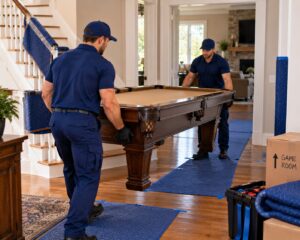
Start at the room where the table currently stands and trace the exact path toward the exit. Look for corners where the table may need to be tilted, obstacles that should be removed, and areas where movers will need extra working space.
At the new property, perform the same exercise in reverse. Professional assistance for specialized pool table transportation can be reviewed at https://pricemovers.com/services/moving-of-large-cargo/pool-table-movers.
Pay attention to stairs
Stairs deserve particular attention because a pool table is heavy, wide, and difficult to maneuver safely.
Count the steps and examine the staircase angle, landing size, railing placement, and available overhead clearance. A narrow landing between two flights can be especially challenging.
If the staircase appears unsuitable, identify an alternative before moving day rather than improvising once the table is already being carried.
Check Exterior Access
The route does not end at the front door.
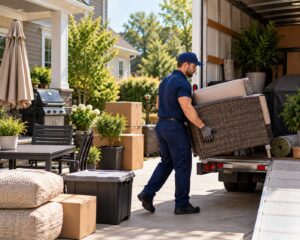
Inspect sidewalks, driveways, gates, parking areas, ramps, and paths between the building and the transport vehicle. Uneven pavement, steep slopes, wet surfaces, loose gravel, or narrow passages can affect how the table is moved.
If the property has a long path from the entrance to the street, determine whether there is enough room for equipment and personnel to work comfortably.
Consider Traffic and Parking Conditions
A technically perfect route can still become inconvenient if the transport vehicle cannot park close to the building.
Check local parking restrictions and determine where loading can take place. For apartment buildings, condominiums, and commercial properties, contact management if loading areas need to be reserved.
If the move involves a busy street, consider the time of day. Reducing unnecessary waiting near the entrance can make the operation more efficient.
Confirm elevator arrangements
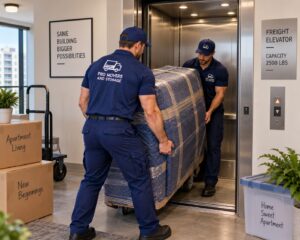
When an elevator is part of the route, measure its interior dimensions and door opening rather than relying on a general assumption that it will fit.
For residential or commercial buildings, confirm whether the elevator can accommodate large items and whether building staff need advance notice.
Remove Obstacles in Advance
Once the route is chosen, make it physically usable.
Move furniture, plants, decorations, boxes, rugs, and other objects away from the planned path. Open doors that can remain safely open and protect vulnerable wall or floor surfaces where appropriate.
A clear route gives movers more room to position the table and reduces the temptation to force it through a difficult space.
Plan for the Destination Room
The destination room should be ready before the table arrives.
Decide exactly where the table will ultimately stand and make sure the area is clear. Remember that pool tables require adequate surrounding space for players to use cues comfortably.
Think about lighting, wall clearance, nearby furniture, and access to electrical outlets if the table or room requires them.
Avoid unnecessary repositioning
It is much easier to place the table correctly during the initial setup than to move it repeatedly afterward.
If the room is being renovated, complete major flooring or wall work first whenever possible. A prepared destination reduces additional handling.
Have an Alternative Route
Even careful planning cannot eliminate every unexpected problem.
A doorway may prove narrower than expected, an elevator may become unavailable, or temporary construction may block an exterior path. Having a backup route gives the moving team another option.
For particularly complex properties, identify an alternative entrance or loading point before transportation begins.
Make the Route Part of the Moving Plan
A pool table move becomes far more manageable when the route is treated as a project rather than an afterthought.
Measure the table and access points, walk the complete path, inspect stairs and elevators, arrange parking, clear obstacles, and prepare the destination room. Most importantly, communicate unusual conditions before moving day.
When the route has been considered from the table’s current position all the way to its final placement, the move can proceed with greater control and fewer surprises.




3 comments