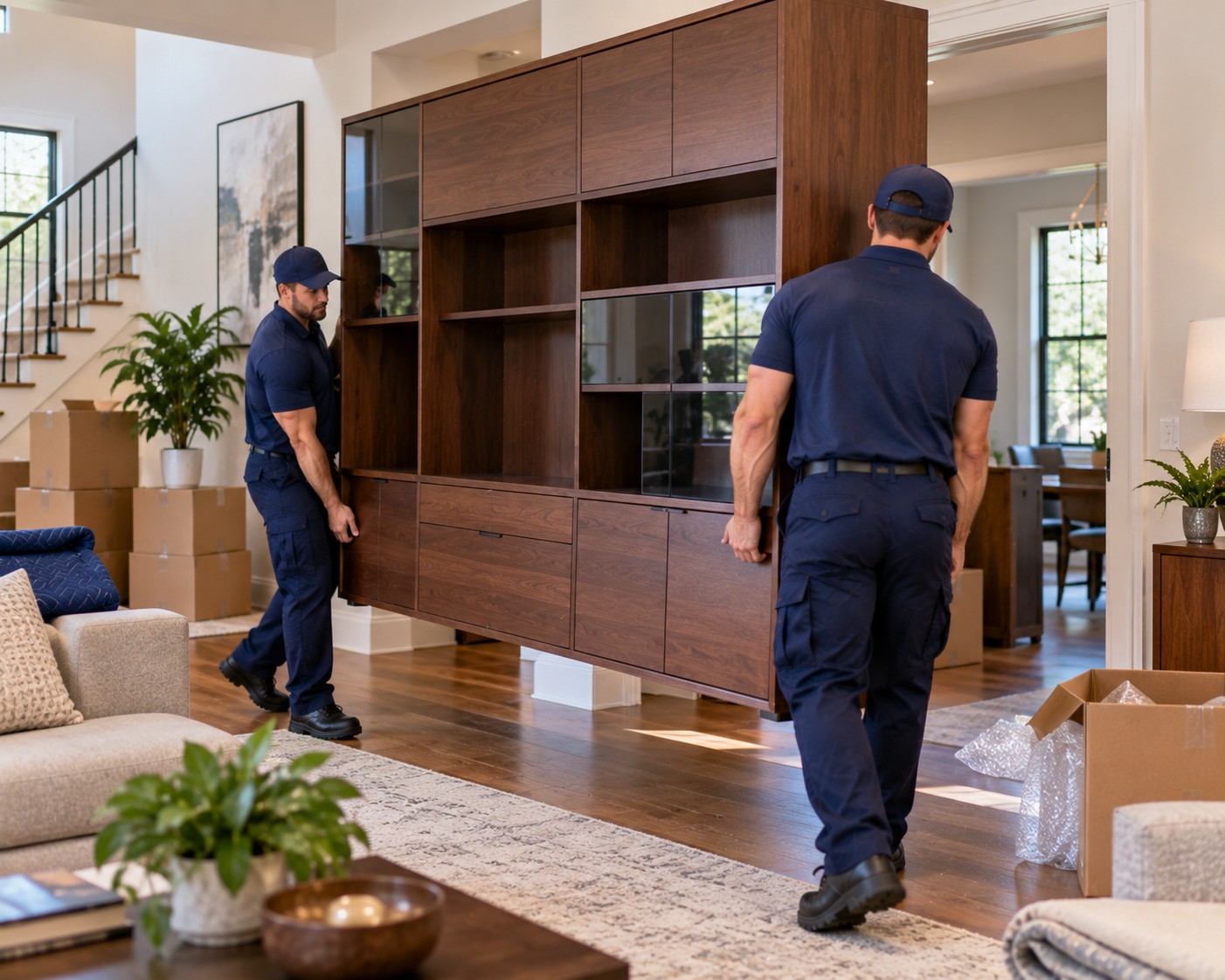
Giving Large Wall Units a Safer Route to Their New Home
A wall unit can completely define a living room, especially when it combines shelving, cabinets, display sections, and a substantial entertainment center. Unfortunately, the same construction that makes these pieces practical can make them awkward to relocate. Moving one between Smyrna residences calls for more than simply finding enough people to lift it.
The safest approach begins with understanding how the unit is constructed, where it needs to travel, and what can be separated before transportation begins.
Start With the Construction, Not the Boxes
Before anything is moved, examine the wall unit from top to bottom. Many large systems consist of several individual modules connected together, while others are essentially one oversized structure.
Open doors and drawers to check for removable shelves, adjustable panels, glass sections, and internal fittings. Taking out these loose components can reduce weight and prevent them from shifting during handling.
Professional movers in Atlanta often deal with bulky residential furniture, but a wall unit still deserves an individual handling plan because its dimensions can be more important than its overall weight.
Photograph and Label Every Section
If the furniture is modular, take photographs before disassembly.
Marking each cabinet or shelf section can make reconstruction at the destination significantly easier. Small bags containing screws, brackets, dowels, and other hardware should be labeled according to the component they belong to.
This simple preparation can save considerable time when the furniture reaches the second residence.
Measure the Route Before Moving Day
A wall unit may fit perfectly against a living-room wall and still be impossible to move through the front entrance in one piece.
Measure doorways, corridors, staircases, elevator entrances, and sharp corners. Pay attention to ceiling height as well as width. A tall cabinet may need to be tilted, and that maneuver requires enough overhead clearance.
Residents arranging a local move can find location-specific assistance through Movers in Smyrna GA, particularly when large household furniture requires careful planning around the property’s access points.
Protect More Than the Furniture
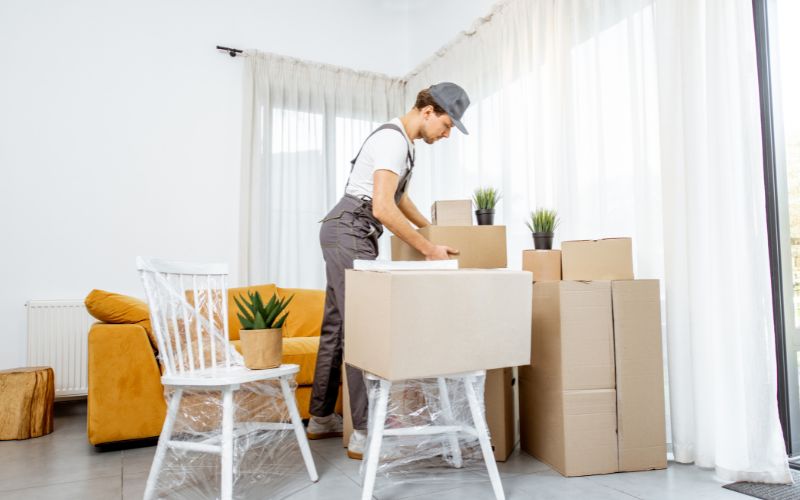
The unit itself is not the only thing at risk.
Large wooden panels can scrape painted walls, dent trim, or damage flooring when they are turned through narrow areas. Protective blankets and suitable padding can help shield finished surfaces while corner protection reduces the chance of accidental impact.
Glass doors and shelves deserve separate treatment. They should generally be removed when practical and wrapped independently rather than left inside the main structure.
Keep Hardware Under Control
A single missing fastener can create a problem during reassembly.
Use sealed bags for hardware and label them immediately. For more complicated units, keep a simple assembly diagram or photograph showing how the sections connect.
If manufacturer instructions are available, keep them with the hardware rather than packing them into an unrelated box.
Consider the New Room Before Loading
The destination should influence the moving strategy.
Measure the wall where the unit will eventually stand. Check electrical outlets, windows, baseboards, vents, and door swings that could affect placement. If the furniture will be used for a television or other electronics, consider cable access before positioning the main sections.
Planning placement beforehand prevents unnecessary repositioning of heavy cabinets after they arrive.
Avoid Dragging Oversized Components
Large furniture should be lifted and controlled rather than dragged across finished flooring.
Dragging can damage both the floor and the bottom edges of cabinets. It can also place stress on joints that were designed to support the furniture while stationary, not withstand sideways pulling.
A coordinated lifting strategy is especially important when moving tall pieces. One person should direct movement while others maintain control of the weight.
Give Fragile Details Extra Attention
Decorative molding, mirrored panels, glass shelving, and protruding handles can turn an otherwise straightforward move into a delicate operation.
Remove what can safely be removed and cushion what must remain attached. Keep decorative surfaces away from direct contact with other furniture during transport.
Residents who compare Movers in Smyrna GA should explain the wall unit’s construction and dimensions when discussing their moving needs rather than simply describing it as a cabinet.
Reassemble With Patience
Once the unit reaches its new location, resist the temptation to rush through installation.
Check that the floor is level, reconnect the appropriate sections, reinstall shelves and doors, and confirm that everything sits securely before loading it with books, electronics, or decorative objects.
A large wall unit can remain a valuable part of a home’s interior for many years. With thoughtful disassembly, accurate measurements, protected surfaces, and controlled handling, relocating it between Smyrna residences becomes a manageable part of the household move rather than an unnecessary source of damage or stress.










Post Comment