From Landslides To Nail-Biters: The Great Midwest Polling Meltdown
A pair of high-profile Democratic primaries in the Midwest were supposed to be runaway victories for far-left candidates, according to weeks of bloated survey numbers. Instead, election night delivered a pair of nail-biting finishes that exposed pollsters as completely out to lunch.
Read more The Bernie Sanders Proposal Not Extreme Enough For Abdul El-Sayed
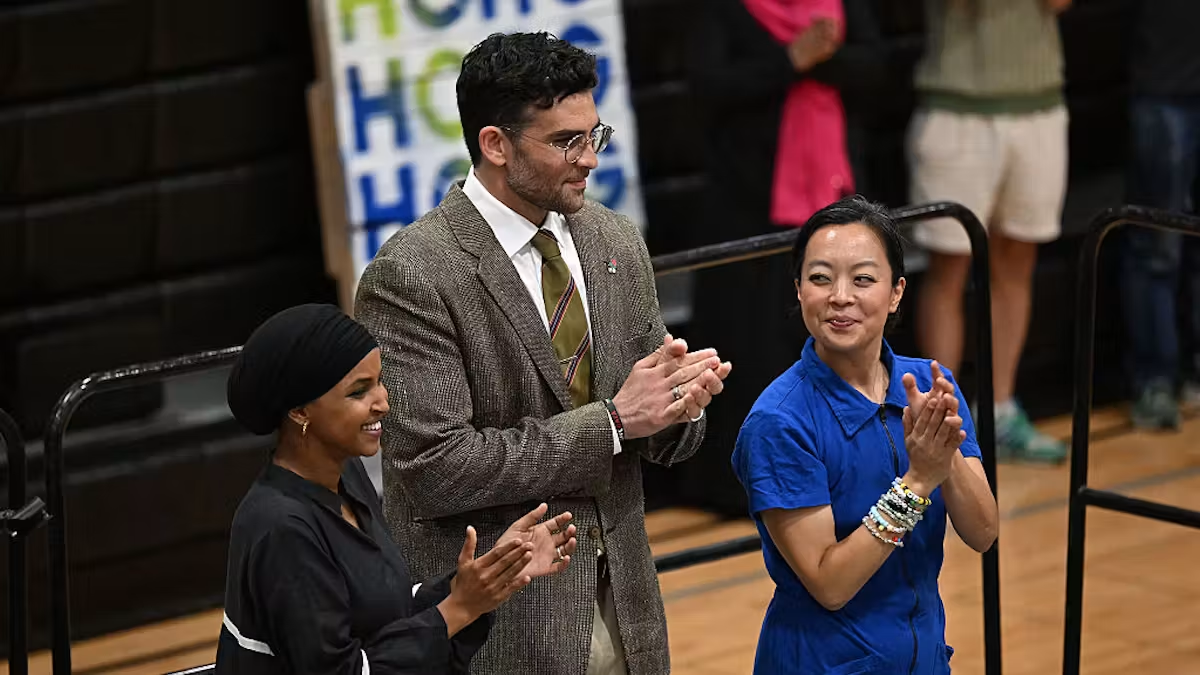
In Wisconsin, Democratic socialist state Rep. Francesca Hong was supposed to waltz into the governor’s nomination. Pundits spent months hyperventilating over her double-digit dominance. Poll after poll showed Hong lapping the field. A late PPP poll put her up by 18, while Marquette had her leading by an eye-popping 22 points in late July.
Yet when voters actually showed up, the supposed landslide vanished into thin air.
Milwaukee County Executive David Crowley, who had actually suspended his struggling campaign earlier this summer due to low numbers and thin cash, staged an incredible resurrection. Re-entering the fray with the crucial backing of outgoing Gov.Tony Evers, Crowley pulled off a jaw-dropping comeback. With 95% of the vote tallied, Crowley squeaked out a victory with 39.81% over Hong’s 39.34%, while Kelda Roys lagged far behind at 7.5%. The Associated Press officially called the race for Crowley, capping off one of the biggest polling whiffs in recent Badger State history.
Read more The Latest Horror Story Out Of Canada’s ‘Free’ Healthcare System
Across the lake in Michigan, pollsters didn’t fare any better.
In the Democratic senatorial primary, hard-Left favorite Abdul El-Sayed was projected to crush rival Rep.Haley Stevens. Emerson had El-Sayed cruising ahead by 15 points, Mitchell Research put him up by 14, and Data for Progress called it a 13-point lead.
When the final tallies rolled in, the “landslide” turned into a total mud fight. El-Sayed barely managed to cross the finish line, eking out a razor-thin 1% victory over Stevens (48.5% to 47.5%), with Mallory McMorrow taking 4.0%.
While both contests ended with outcomes vastly different from the promised hype, one trend is crystal clear: If you’re looking for accurate predictions, you’d probably have better luck asking a crystal ball than reading the latest poll.
Read more The Bernie Sanders Proposal Not Extreme Enough For Abdul El-Sayed











Post Comment