Trump’s White House Ballroom Plans Just Hit A Major Legal Roadblock
A federal appeals court on Friday blocked further above-ground construction of President Donald Trump’s planned White House ballroom, ruling that the administration cannot move forward with the project without congressional authorization.
Read more Trump’s White House Ballroom Plans Just Hit A Major Legal Roadblock
The U.S. Court of Appeals for the D.C. Circuit that Congress, not the president alone, has authority to approve the ballroom project, siding with the National Trust for Historic Preservation, which challenged the construction. The court paused its ruling for two weeks to give the Trump administration time to seek emergency relief from the Supreme Court.
“Whether or not a massive ballroom should be constructed is for Congress to decide and is not a matter for executive self-help,” the court wrote.
The ruling, however, does not completely halt all work at the site. The panel allowed below-ground construction to continue, including work related to security infrastructure, while permitting above-ground construction only when strictly necessary to protect those facilities or ensure the safety and structural integrity of the White House complex.
The decision came from a three-judge panel consisting of U.S. Circuit Judges Patricia Millett, Neomi Rao, and Bradley Garcia. Millett, appointed by former President Barack Obama, and Garcia, appointed by former President Joe Biden, formed the majority. Rao, a Trump appointee, dissented.
“Each president is a temporary tenant, not the owner, of the White House and its executive residence,” Millett and Garcia wrote in their opinion.
The judges argued that the White House belongs to the American people and that major structural changes require congressional approval.
“We are aware of no instance in American history in which a President unilaterally and using privately collected funds demolished substantial portions of the White House that Congress authorized to be built and American taxpayers paid for,” the majority wrote.
Rao argued that the courts had overstepped their authority by intervening in a presidential construction project and said Trump had sufficient authority to proceed.
Read more El-Sayed Once Trashed Beloved Michigan Vacation Destination
“The district court seized supervision of construction at the White House, and my colleagues affirm this judicial overreach,” Rao wrote. “Because the injunction is beyond the proper province of the federal courts, construction should be allowed to continue.”
Trump announced plans for the 90,000-square-foot ballroom as part of a broader effort to expand event space at the White House. Trump has said the ballroom would cost roughly $400 million and would be funded through private donations rather than taxpayer money, though subsequent reporting has raised questions about the extent of public funding for security work associated with the broader project.
The administration has argued that the ballroom is necessary for both practical and national security reasons, citing the difficulty of hosting large events in temporary structures and the need for additional security capabilities.
Government attorneys have argued that the project includes protections against threats including drones, ballistic missiles, and other attacks targeting the president and White House personnel.
The National Trust for Historic Preservation argued that the administration lacked authority to demolish the East Wing and begin construction without additional approvals.
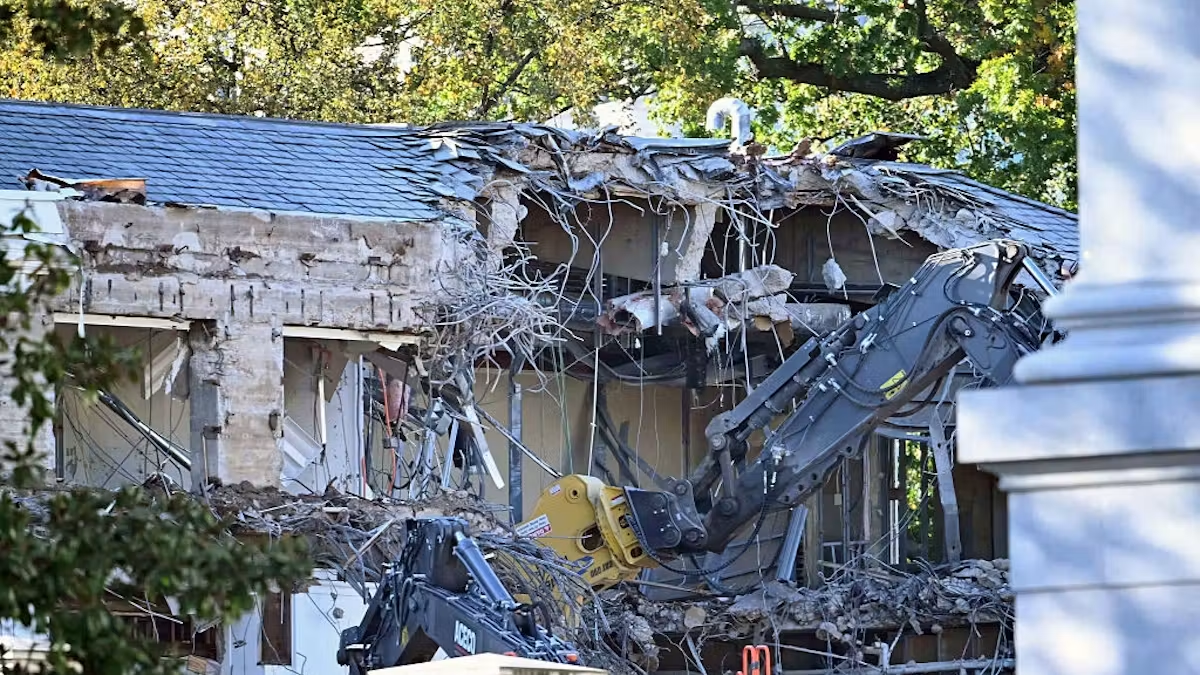
The White House demolished the East Wing last fall to make way for the new structure, sparking criticism from preservation groups that said the project represented an unprecedented alteration of the historic complex.
The appeals court’s decision leaves the future of the ballroom uncertain as the administration continues to weigh whether to seek intervention from the Supreme Court.
Read more Mike Rogers Makes His Pitch For Dem Support In Michigan After El-Sayed’s ‘Divisive’ Victory













Post Comment