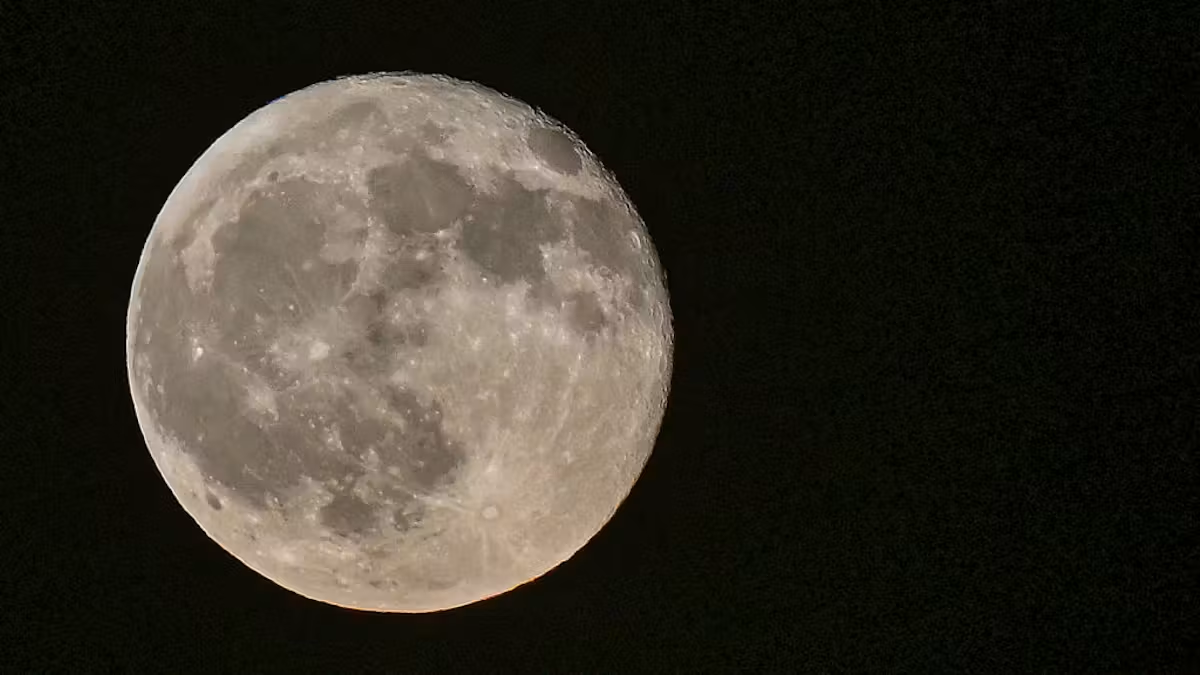
See The Crash Site After SpaceX Rocket Slams Into Moon
Fresh photos reveal the scars left behind after a SpaceX rocket stage slammed into the moon at a mind-boggling 5,400 mph.
Read more Iranian Refugee Issues Chilling Warning After Video From U.S. City
South Korea’s Danuri spacecraft captured the first look at the cosmic crash site after making multiple orbits above the freshly carved crater. The Korea Aerospace Research Institute released the before-and-after snapshots, showing a noticeably darkened space where the rogue Falcon 9 upper stage plowed into the moon on Wednesday, blasting dust and debris across the landscape.
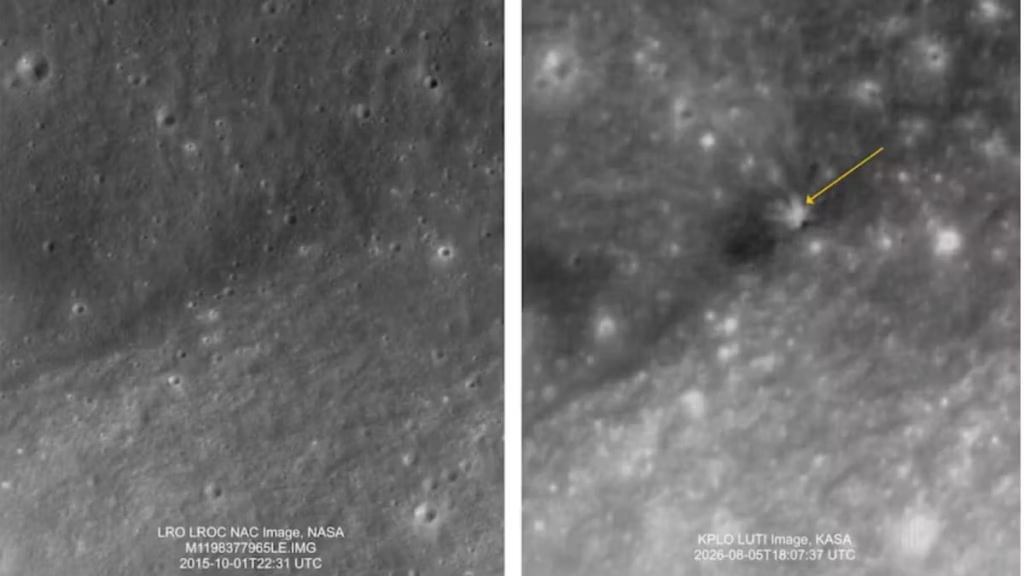
The 45-foot-long, 8,800-pound upper stage was originally launched by Elon Musk’s aerospace giant back in January 2025 to deliver private lunar landers. While lower-orbit rocket parts usually burn up harmlessly in Earth’s atmosphere, high-energy deep-space missions require complicated disposals. Over time, gravitational pulls and solar radiation knocked the hulk off course, putting it on a collision trajectory with the moon near the Einstein crater.
Scientists estimate the high-speed impact blasted out a brand-new crater spanning up to 60 feet wide and 12 feet deep. The flash of the violent crash lasted roughly one second, but the ejected lunar dust could scatter hundreds of miles across the surface.
Read more More than 1,000 African Migrants Who Stormed Ceuta Could Soon Be Moved To Mainland Spain
Unlike NASA and European space agencies, which operate under strict regulatory mandates for spacecraft disposal, commercial operators follow a looser set of rules. Experts warn that unguided space debris poses a potential threat to historical lunar heritage sites, such as the iconic Apollo landing grounds.
But researchers are seizing on the accidental impact as a massive scientific opportunity. Because astronomers already knew the exact mass, velocity, and trajectory of the Falcon 9 stage, they are treating the crash as a controlled experiment so they can better understand how planetary surfaces absorb severe impacts.
South Korea’s orbiter got the jump on the action by photographing the initial impact zone, but NASA’s Lunar Reconnaissance Orbiter is scheduled to make its own flyover next week. Researchers plan to spend months analyzing the before-and-after imagery to study the freshly exposed lunar soil. That will offer critical data as NASA pushes forward with its Artemis program.













Post Comment