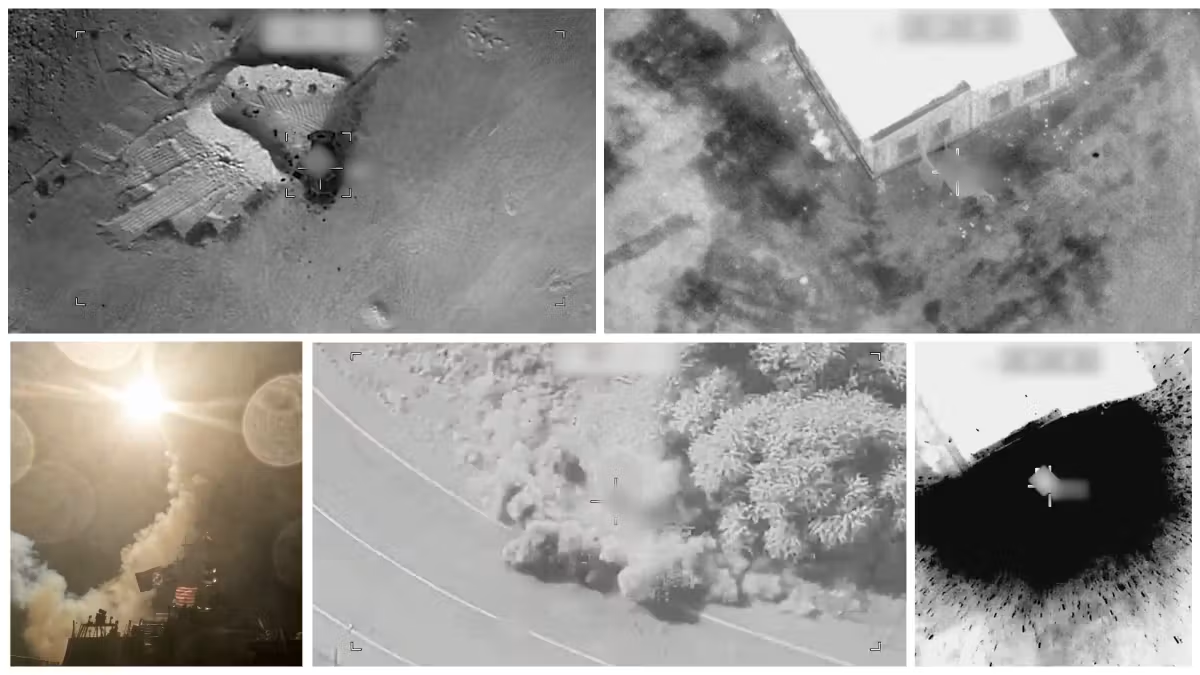
U.S. Pounds Bridges And Roads To Cut Off Iran’s Strategic Port City
The U.S. military appears to be tightening the noose around Bandar Abbas, Iran’s most strategic port city, after striking multiple bridges, railways, and military infrastructure during its sixth consecutive night of attacks.
Read more See How U.S. Marines Are Confronting Iran’s Threats
The city of more than half a million people sits on the Strait of Hormuz, hosts the headquarters of Iran’s navy, and serves as a critical hub for the regime’s commercial operations.
The latest strikes appeared aimed at isolating Bandar Abbas from the rest of Iran by targeting key transportation links connecting the port city to the country’s interior, including routes leading toward Tehran.
Iranian state media outlet IRIB reported that a railway junction near Bandar Abbas was struck, and highways connecting the city to nearby provinces were closed.
Iranian journalist Vahid Online shared images showing the apparent destruction of a bridge and railway line at the Bandar Abbas junction, as well as video footage that shows a highway bridge that had collapsed following the strikes.
ویدیوی دریافتی: پل تخریب شده در کهورستان شهرستان خمیر استان هرمزگان
بنا بر گزارشها شب گذشته، پنجشنبه ۲۵ تیر، در حمله هوایی آمریکا هدف گرفته شده.#بندرعباس #Iran https://t.co/ovCwtLw5hU pic.twitter.com/uE6f3YSJS5— Vahid Online (@Vahid) July 17, 2026
The damaged rail and road infrastructure could complicate the movement of goods, military equipment, and personnel to and from one of Iran’s most important ports.
The transportation attacks came alongside continued U.S. efforts to target Iran’s maritime infrastructure and weaken Iran’s grip on the Strait of Hormuz.
Secretary of War Pete Hegseth posted images of U.S. troops accompanied by the message, “Iran does not control the SoH,” referring to the Strait of Hormuz. In a separate post, Hegseth shared a photograph showing what appeared to be a communications tower destroyed in an airstrike.
U.S. Central Command (CENTCOM) later confirmed that U.S. forces had destroyed the Chah Bahar Shahid Kalantari Port surveillance tower on July 16. According to the military, the tower was part of a maritime surveillance network used by the Islamic Revolutionary Guard Corps (IRGC) to monitor and target commercial vessels transiting the Strait of Hormuz.
On July 16, U.S. forces successfully destroyed the Chah Bahar Shahid Kalantari Port surveillance tower, part of a maritime surveillance network along Iran’s Gulf of Oman coastline used for decades by the Islamic Revolutionary Guard Corps (IRGC) to track and target commercial… pic.twitter.com/CgBNvgOFf9
Read more EXCLUSIVE: JD Vance Tells Bishop Barron What’s Gone Wrong In America
— U.S. Central Command (@CENTCOM) July 17, 2026
“The destruction of the tower directly degrades IRGC’s ability to coordinate attacks on innocent civilian crew members,” CENTCOM said. The command added that the strike was intended to protect freedom of navigation in regional waters while supporting the ongoing U.S. naval blockade of Iran.
According to CENTCOM, U.S. forces conducted strikes at approximately 9:40 p.m. ET using fighter aircraft, drones, and naval assets.
The operation also targeted dozens of Iranian military sites, including coastal surveillance positions, air defense systems, military logistics infrastructure, and maritime capabilities, according to CENTCOM.
“At the commander in chief’s direction, CENTCOM is further degrading Iranian military capabilities and holding Iran accountable for recent attacks on commercial shipping,” the command said in a statement. CENTCOM added that more than 50,000 U.S. service members remain deployed across the Middle East.
The expanding U.S. campaign is also placing increasing strain on Iran’s domestic infrastructure. Iran’s Energy Ministry urged residents to reduce electricity consumption after strikes on energy facilities reportedly disrupted parts of the country’s power network. Officials asked citizens to limit electricity use during peak hours and reduce air conditioner usage where possible, citing both extreme summer temperatures and recent attacks on power infrastructure affecting southern provinces.
Iran responded by expanding its own attacks across the Gulf region, targeting several U.S. allies.
Kuwait’s Ministry of Electricity, Water and Renewable Energy announced Friday that an Iranian strike hit a power generation and water desalination facility, damaging infrastructure, igniting a fire, and knocking multiple electricity-producing units offline. Officials said emergency crews contained the blaze and activated contingency plans to stabilize the grid.
Iran also launched attacks against Qatar, a key mediator in negotiations between Washington and Tehran. According to Qatari authorities, a child was injured by falling shrapnel during the attack. Bahrain was also targeted in the latest round of Iranian strikes.
During a primetime address Thursday evening, President Donald Trump pointed to the ongoing military campaign as evidence of progress.
“We are likewise winning big in Iran, and you will see the fruits of that labor very, very shortly,” Trump said.












Post Comment